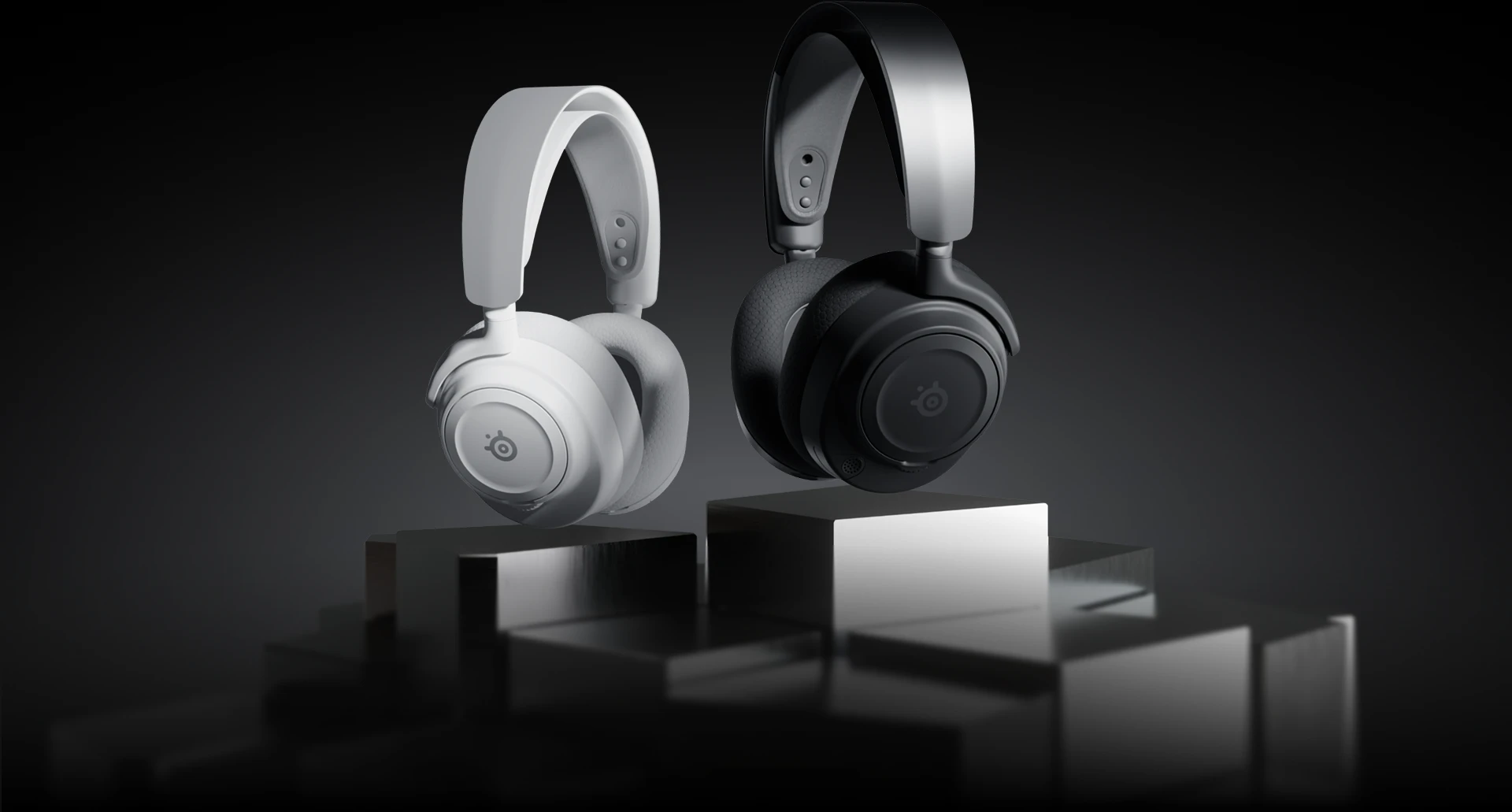
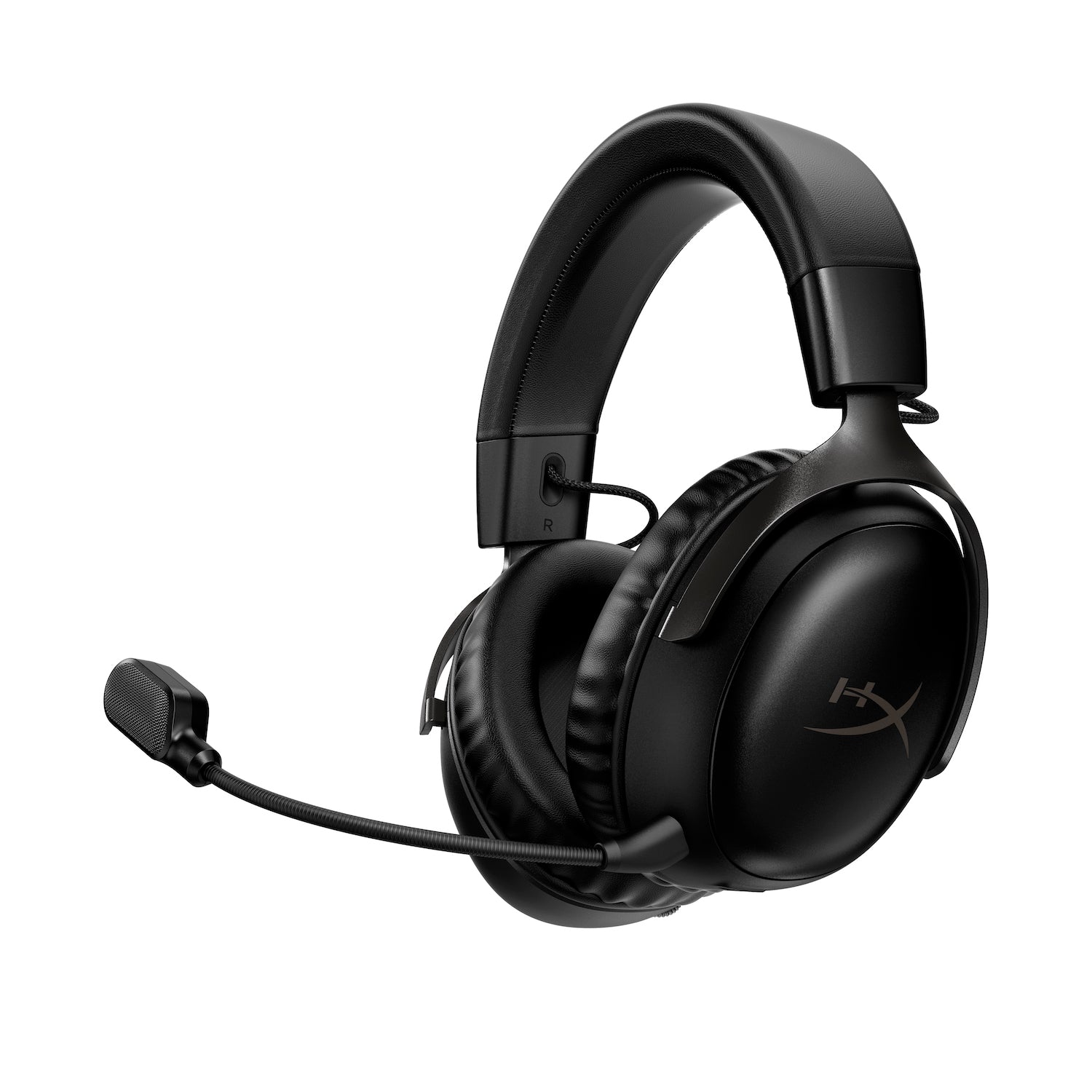
Bluetooth is the biggest practical difference.
Running two audio sources at once
The Nova 7's simultaneous 2.4GHz-plus-Bluetooth link means a
phone call, a Spotify queue, or a second laptop can stay
connected over Bluetooth while Discord and game audio come
through the 2.4GHz dongle. The Cloud III Wireless has no
Bluetooth radio, so it is one audio source at a time, over one
2.4GHz connection. For anyone who regularly needs a second
device in the mix, this alone decides the purchase.
Two different approaches to a clear voice
SteelSeries leans on aggressive AI noise cancellation, and
reviewers at PCWorld and TechPowerUp describe the result as loud
and consistently intelligible, but with a thinner, slightly
nasal character next to full-size condenser mics. HyperX's 10mm
capsule is described by reviewers at TheShortcut and GamesRadar
as sounding more natural, at the cost of a noticeably lower
recording volume that persists even with gain maxed out in
HyperX's software. On Discord, both are clearly understandable;
the difference is tone and how loud you'll sound to the people
you're talking to.
Battery life you actually notice
50+ hours versus up to 120 hours is the difference between
charging weekly and charging every few weeks. If you run
Bluetooth alongside 2.4GHz on the Nova 7, that runtime drops
further, which widens the gap in daily use beyond what the
spec sheets alone suggest.
Mixing game audio against voice chat
The Nova 7's onboard ChatMix dial lets you balance Discord voice
against game audio by turning a wheel on the earcup, without
opening any software. The Cloud III Wireless has no onboard
mix control, so that balance has to be set through your
platform's own audio mixer, which is one more menu to manage
mid-session. Anyone building around the practical setup
guidance on the OSRS setup hub, reachable
controls without breaking focus, will feel this difference
directly.