Compact work keyboards · comparison

Logitech MX Keys Mini vs Keychron B1 Pro: which should you buy?

They occupy almost the same footprint, but one prioritizes illuminated keys and Logitech software while the other adds three connection modes and editable keymaps.

The short answer

Get MX Keys Mini for backlit keys, proximity lighting, and Logitech Options+ integration. Get Keychron B1 Pro for 2.4 GHz wireless, wired operation, a long stated battery life, and ZMK remapping. B1 Pro is the stronger value; MX Keys Mini earns its place when backlighting or Logitech Flow matters.

Page freshness
Before orderingRecheck the exact configuration

Choose illumination or connection flexibility

Both are compact scissor keyboards. The decision turns on the features around typing, not a claim that one key mechanism is categorically better.

As an Amazon Associate we earn from qualifying purchases.

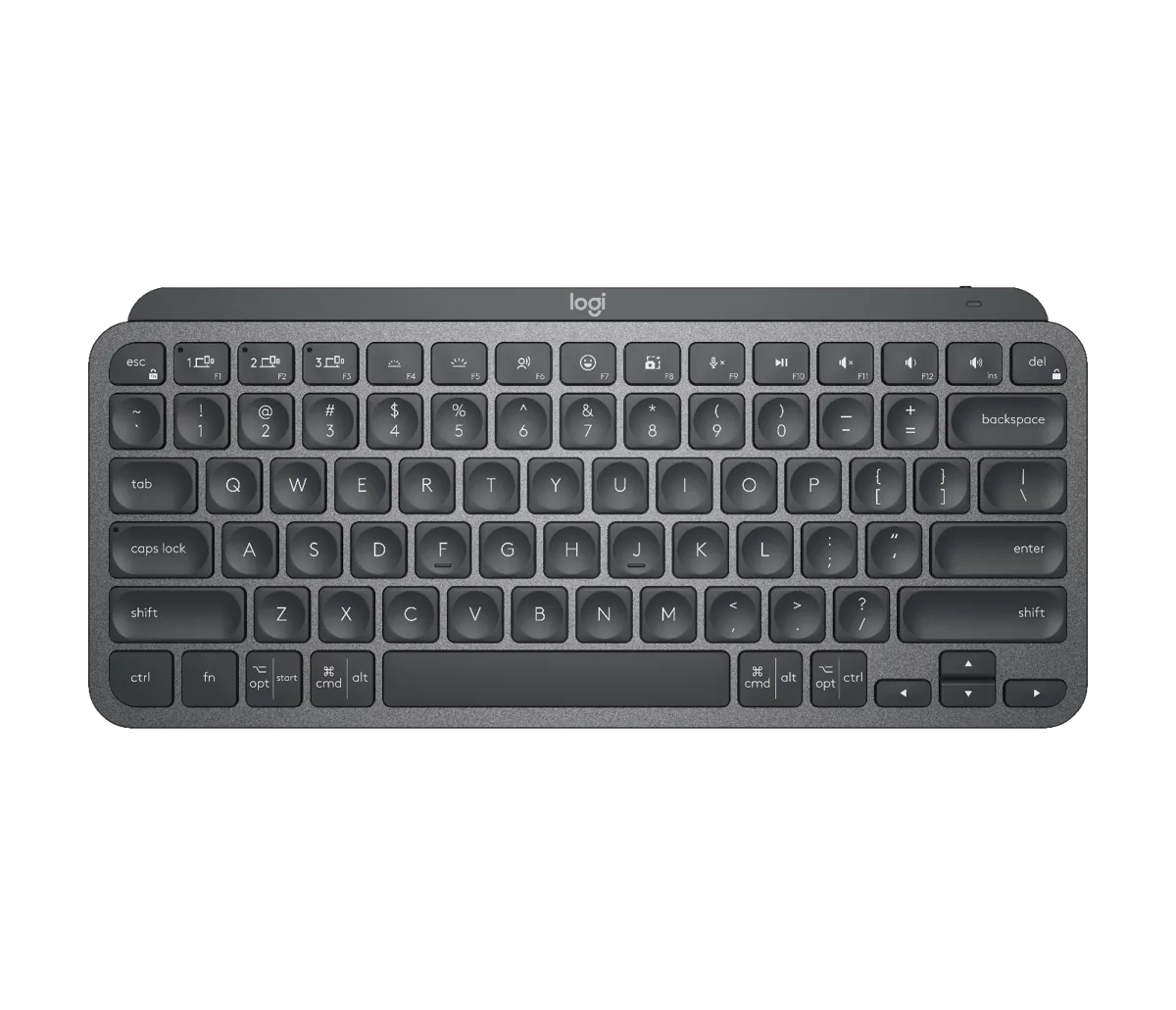
Graphite Logitech MX Keys Mini compact keyboard
The backlit ecosystem pick

Logitech MX Keys Mini

Best for: dim-room typing, an existing Logitech mouse, or buyers who want Options+ shortcuts and Logitech Flow.

Tradeoff: it lacks a standard wired typing mode, and a Logi Bolt receiver may be an extra purchase for the consumer model.

Logitech lists 1.8 mm travel, proximity-activated backlighting, three-device Easy-Switch, and up to five months of use with the lighting off.

Check current price on Amazon
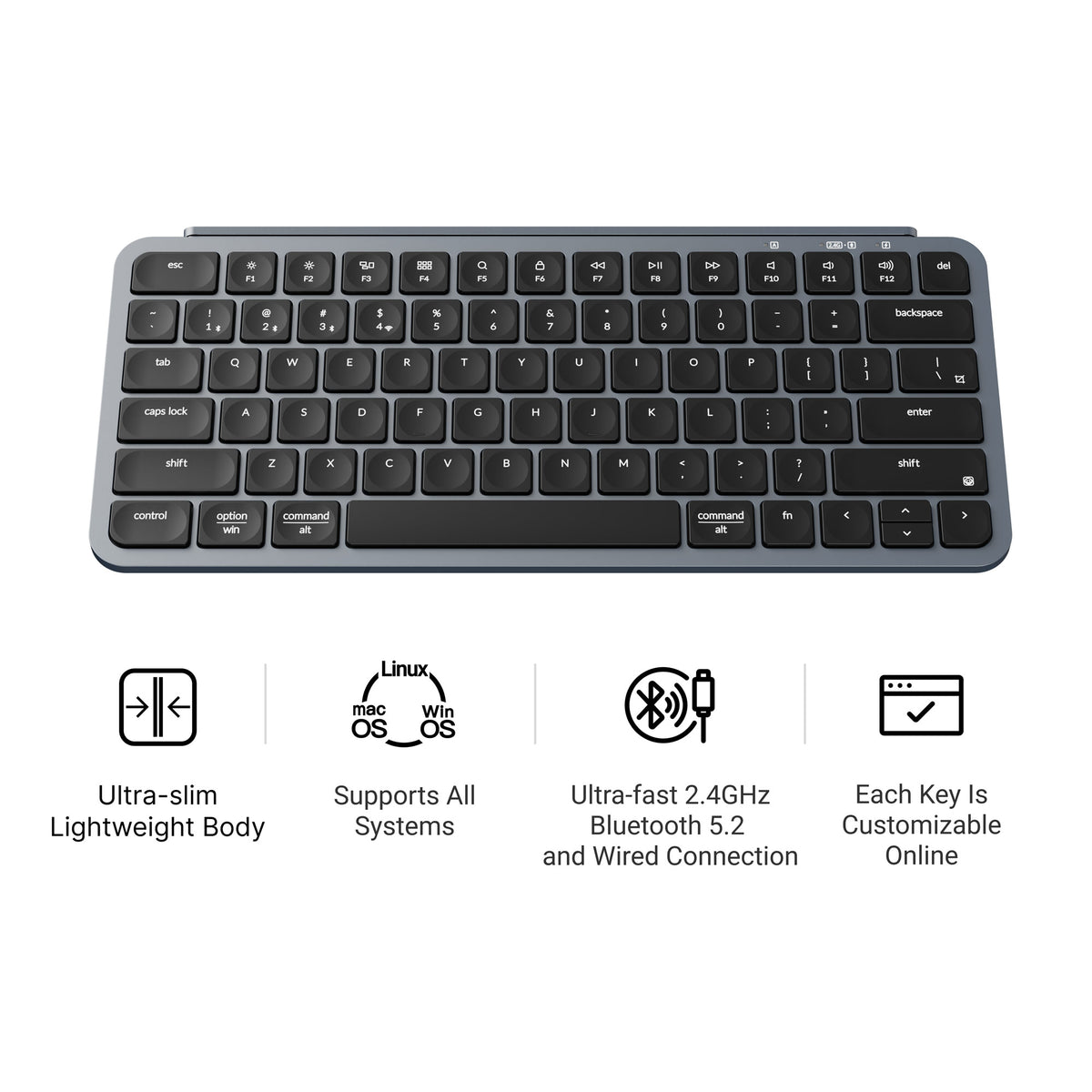
Keychron B1 Pro ultra-slim wireless keyboard
The flexible value pick

Keychron B1 Pro

Best for: a desk needing 2.4 GHz, Bluetooth, and USB-C wired input in one thin 75% keyboard.

Tradeoff: it has no backlight and no N-key rollover, so it is a productivity board rather than a gaming-keyboard substitute.

Keychron lists 77 keys, 1,000 Hz polling over 2.4 GHz or wired, three Bluetooth pairings, and ZMK customization through Keychron Launcher.

Check current price on Amazon

MX Keys Mini vs Keychron B1 Pro decision specs

Both are roughly 296 mm wide; the rows below focus on differences that change use.

Logitech MX Keys Mini and Keychron B1 Pro differences
Feature MX Keys Mini B1 Pro Edge
Backlight Yes; proximity activated None Logitech
Connections Bluetooth; Logi Bolt compatible 2.4 GHz, Bluetooth 5.2, USB-C wired Keychron
Device switching 3 Easy-Switch devices 3 Bluetooth plus dedicated 2.4 GHz Keychron for more paths
Battery claim 10 days lit; 5 months unlit Up to 1,200 hours / 8 months Keychron
Customization Logi Options+ Keychron Launcher with ZMK Depends on workflow
Polling rate Not published as a gaming feature 1,000 Hz at 2.4 GHz or wired; 90 Hz Bluetooth Keychron

The real difference is everything around the scissor keys

MX Keys Mini earns its premium in a dim room

Logitech’s backlight responds when hands approach the keyboard. That is useful when the desk lighting changes through the day. It also changes battery expectations sharply: the published figure drops from five months with lighting off to ten days with it on.

B1 Pro is easier to place in mixed hardware

The Keychron can use a low-latency 2.4 GHz receiver, three Bluetooth pairings, or a USB-C cable. If Bluetooth pairing fails, you can plug in the USB-C cable or use the 2.4 GHz receiver on the main PC. MX Keys Mini charges over USB-C but does not become a standard wired keyboard through that cable.

The software philosophies differ

Options+ is most useful when the keyboard joins a Logitech mouse and Flow workflow. Keychron Launcher exposes ZMK keymap editing in a browser-oriented tool. The deciding question is whether you want application shortcuts inside Logitech’s ecosystem or direct layout changes on a less expensive board.

Neither is a mechanical gaming board

Both prioritize thin scissor keys and compact productivity. Keychron explicitly lists no N-key rollover on the B1 Pro. MMO chat, browsing, and ordinary hotkeys are reasonable uses, but buyers who need simultaneous complex key combinations should choose a keyboard designed for that requirement.

Which low-profile keyboard fits your routine?

Evening work with low room light

MX Keys Mini

The illuminated legends and hand-proximity behavior solve a need the non-backlit B1 Pro cannot.

Logitech mouse and Flow workflow

MX Keys Mini

Keep keyboard and mouse customization together in Options+ when that software already runs the desk.

Primary PC on 2.4 GHz, tablet on Bluetooth

Keychron B1 Pro

The dedicated receiver path leaves Bluetooth channels available for mobile devices.

Travel board with an emergency cable

Keychron B1 Pro

USB-C wired operation gives the keyboard a working connection even when wireless pairing is inconvenient.

Neither includes full-size keyboard keys

Neither includes a number pad, mechanical switches, deep key travel, or full-size navigation spacing. Their thin bodies still need a sensible desk position. If your workload depends on a numpad or dedicated Home, End, and Page keys, a compact board creates a shortcut problem rather than solving a space problem.

Questions about MX Keys Mini vs Keychron B1 Pro

Does Keychron B1 Pro have backlighting?

No. Keychron lists the B1 Pro as non-backlit. Logitech MX Keys Mini has proximity-aware backlighting, which is its clearest advantage in a dim room. The tradeoff is battery life: Logitech quotes 10 days with lighting versus five months with lighting disabled.

Can MX Keys Mini use a USB receiver?

MX Keys Mini is compatible with Logi Bolt, but the consumer package may not include the receiver, so check the exact listing. Keychron B1 Pro includes a dedicated 2.4 GHz path as part of its three-mode design, alongside Bluetooth and USB-C wired operation.

Which keyboard is better for switching between Mac and Windows?

Both support Mac and Windows. MX Keys Mini uses Logitech Easy-Switch and dual-marked keys, while B1 Pro adds a system toggle and browser-based ZMK keymap customization. Choose Logitech for its established Options+ workflow or Keychron when you want to edit the layout more directly.

Is Keychron B1 Pro a mechanical keyboard?

No. Keychron B1 Pro is an ultra-slim scissor-style productivity keyboard, not a mechanical board. MX Keys Mini also uses scissor keys. This comparison is about low-profile wireless workflow, backlighting, connections, and software rather than switch swapping or mechanical key feel.